Running a café, pub, restaurant, takeaway or other food business means keeping the kitchen clean is about far more than appearances. Grease, food debris, spills and condensation can build up quickly, particularly in busy kitchens operating for long hours.
A planned cleaning routine helps protect food hygiene, staff safety, equipment and your reputation. It can also help you prepare for Environmental Health Officer visits, meet insurance conditions and reduce the risk of unexpected disruption.
For businesses looking for commercial cleaning in Bury St Edmunds, a professional deep clean can provide the detailed work that is difficult to complete during normal service. This guide explains what a commercial kitchen deep clean should cover and how to plan regular cleaning across your premises.
Why scheduled kitchen deep cleaning matters
Daily cleaning is essential, but it may not reach every area where grease and dirt accumulate. Cooking vapours can settle on extraction hoods, walls, ceilings, equipment, shelving and floors. Small amounts of residue can become difficult, sticky deposits if they are left untreated.
Scheduled deep cleaning is important for several reasons:
Food hygiene
Food preparation areas, equipment and storage spaces need to be kept clean and maintained properly. A written cleaning schedule supports your food safety management system and helps staff understand what needs to be cleaned, how often and by whom.
The Food Standards Agency’s Safer Food, Better Business guidance includes cleaning and disinfection as part of managing food safety. Keeping completed cleaning records can also help demonstrate what your business does in practice.
Grease and fire risk
Grease deposits in cooking areas and extraction systems can create a serious fire risk. Filters alone do not remove every grease deposit from a commercial extraction system, so the canopy, ductwork, fan and discharge points may require specialist cleaning.
Industry guidance such as BESA’s information on kitchen extract system cleaning explains why extraction cleaning should be planned according to kitchen usage and supported by appropriate records.
EHO inspections
An Environmental Health Officer may look at the cleanliness of food contact surfaces, equipment, floors, walls, storage and ventilation. They may also ask about your cleaning schedule, food safety records and how cleaning chemicals are controlled.
A clean kitchen does not guarantee a particular food hygiene rating, but good routines and clear records show that cleaning is being managed consistently.
Insurance and business continuity
Some insurers expect commercial kitchens to have regular extraction cleaning and documentary evidence. If your business suffers a fire or equipment problem, maintenance records may be requested.
Regular cleaning can also help equipment work more efficiently, reduce unpleasant odours and avoid the need for an emergency clean during a busy trading period.

What does a commercial kitchen deep clean include?
The exact scope should be agreed during a site visit, as kitchens vary in size, equipment and cooking methods. A thorough deep clean may include the following.
Extraction hoods and filters
Extraction canopies and filters collect grease during cooking. A deep clean should remove grease from accessible surfaces, filters, surrounding panels and the plenum area.
If the ductwork and fan require cleaning, confirm that the contractor has the correct experience, equipment and reporting process. For busy kitchens, extraction cleaning may need to take place more often than once a year.
Ovens, ranges and fryers
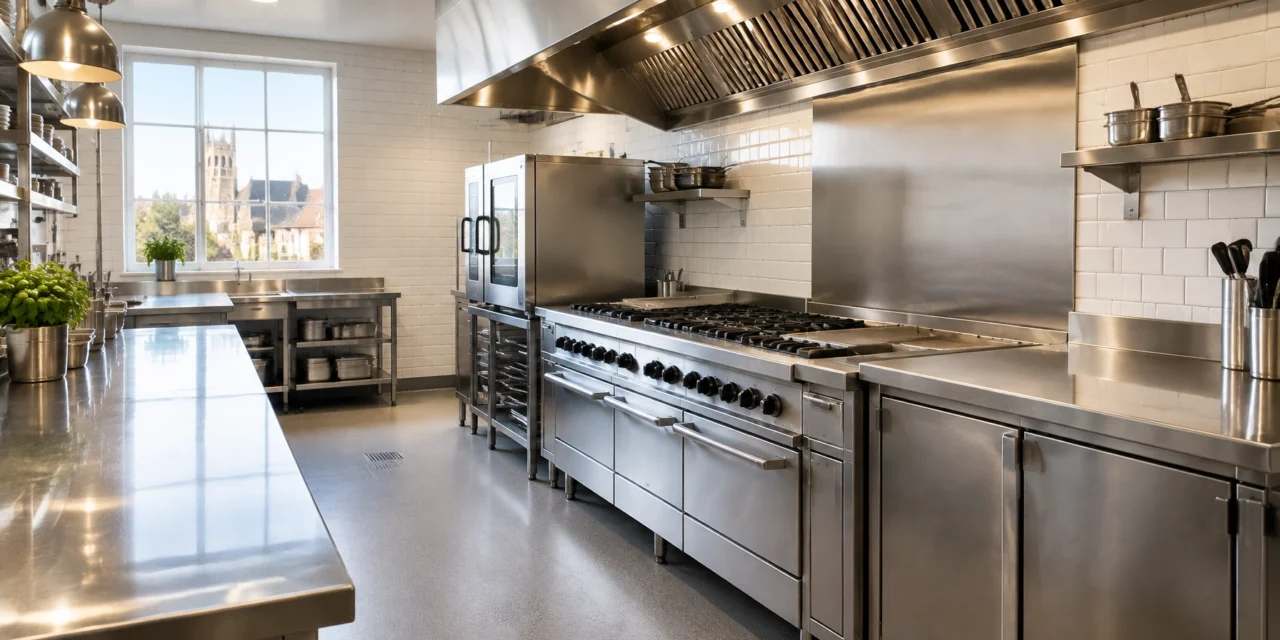
Ovens, hobs, grills, ranges and fryers need careful degreasing. Cleaning should include accessible surfaces, controls, splashbacks and the areas around and underneath equipment.
Appliances should be isolated and cooled safely before work begins. Cleaning products must be suitable for the surface and used according to the manufacturer’s instructions.
Fridges and freezers
A deep clean may include emptying and cleaning shelves, trays, seals, handles, interiors and external surfaces. Food should be stored safely while the work is completed, and damaged seals or other maintenance issues can be reported to the manager.
Stainless steel surfaces
Stainless steel worktops, sinks, splashbacks, shelving and equipment can show grease, water marks and fingerprints. The correct products and methods help remove residue without scratching or damaging the finish.
Food contact surfaces should be cleaned and disinfected using products suitable for food premises, with attention paid to contact times and rinsing instructions.
Floors and drains
Commercial kitchen floors need more than a quick mop. A deep clean should tackle grease, food debris and dirt around equipment, corners, kick plates and hard-to-reach areas.
Drains should also be checked and cleaned where included in the agreed scope. Keeping floors and drainage areas clean can help reduce odours, slips and pest-attracting residue.
Wall tiles, doors and high-level areas
Grease can settle on wall tiles, doors, ledges, pipework and other surfaces close to cooking equipment. High-level cleaning is often missed during busy shifts, so it is an important part of a planned deep clean.
Storage and overlooked areas
Shelving, cupboards, dry stores and the areas behind or beneath movable equipment can collect dust, food particles and grease. Cleaning these areas helps create a more complete result and can make stock checks easier.
Daily, weekly and quarterly kitchen cleaning tasks
A practical cleaning schedule divides responsibilities between routine staff cleaning and periodic professional work.
| Frequency | Typical tasks |
|---|---|
| Daily | Clean and disinfect food contact surfaces, wash utensils, clean sinks, wipe equipment, remove food waste, sweep and mop floors, clean spills promptly and check toilets or customer areas where relevant. |
| Weekly | Degrease accessible equipment, clean shelving, doors and splashbacks, clean fridge seals and handles, wash or replace filters according to the manufacturer’s guidance, and clean less accessible floor areas. |
| Monthly or quarterly | Deep clean ovens, fryers, ranges, walls, floors, drains, storage areas and the spaces behind equipment. Review the cleaning schedule and identify recurring problem areas. |
| As required by risk assessment | Arrange specialist extraction cleaning, including the canopy, ductwork, fan and discharge points. Frequency depends on cooking type, operating hours and grease accumulation. |
A busy pub or restaurant using fryers and grills may need more frequent specialist cleaning than a small café with limited cooking. Your contractor should assess the premises rather than applying the same schedule to every business.
How to fit deep cleaning around service hours
Commercial kitchens rarely have spare time during the day. Most deep cleans are therefore planned after closing, before opening or during a scheduled shutdown.
When arranging a clean, consider:
- The quietest trading day or night
- Staff rotas and keyholder availability
- Cooling and isolation time for appliances
- Access to water, electricity and ventilation
- Safe storage of food and packaging
- Drying time before food preparation resumes
- Any maintenance or pest control work already planned
For larger kitchens, it may be practical to clean in stages rather than close the whole operation. A cleaning contractor should agree the sequence with you in advance and explain what needs to be moved, covered or isolated.

Choosing a commercial cleaning contractor
The right contractor should be able to explain exactly what is included, what is excluded and how the work will be carried out safely.
Before booking, ask about:
Experience with food premises
Cleaning a commercial kitchen is different from cleaning a general office. Look for experience with cafés, pubs, restaurants, takeaways or similar food businesses in Bury St Edmunds and surrounding Suffolk areas.
COSHH awareness
Cleaning products such as degreasers, oven cleaners, disinfectants and descalers may be hazardous if used incorrectly. The Health and Safety Executive’s COSHH guidance explains the need to assess and control risks from hazardous substances.
A contractor should be able to discuss suitable products, safe dilution, PPE, ventilation, chemical storage and protection of food preparation areas.
Risk assessments and insurance
Ask whether the contractor provides suitable risk assessments and method statements for the work. You should also confirm that they hold appropriate public liability insurance and can provide evidence if requested.
References and clear records
References from similar businesses can be useful, particularly if the contractor has worked in a kitchen with comparable equipment and operating hours.
After the clean, you should receive a clear record of the work completed. For specialist extraction cleaning, ask whether the service includes before-and-after photographs, inspection notes or a certificate where appropriate.
Suitable commercial cleaning contracts
If your kitchen needs regular attention, a planned commercial cleaning contract can be easier to manage than arranging individual visits. A contract may combine routine cleaning, periodic deep cleans and review dates, with the frequency adjusted as your business changes.
Make sure the agreement sets out cleaning tasks, visit frequency, access arrangements, response times and how additional work will be quoted. The lowest price is not always the best value if important areas are excluded.
Book a kitchen cleaning walk-round in Bury St Edmunds
Every commercial kitchen is different. The best starting point is a walk-round so the cleaning requirements can be assessed properly.
During a visit, point out:
- The type and age of your cooking equipment
- Areas where grease or odours build up
- Extraction access points
- Your current daily and weekly cleaning routines
- Opening hours and preferred cleaning times
- Any upcoming inspection, refurbishment or insurance requirement
At Cleaning, we provide cleaning services in Bury St Edmunds and surrounding Suffolk areas for private businesses and commercial premises. Whether you need a one-off kitchen deep clean or ongoing support through professional cleaners in Suffolk, a walk-round helps create a realistic cleaning plan for your business.
Contact us to discuss your requirements and arrange a suitable visit.

Frequently asked questions
How often should a commercial kitchen have a deep clean?
There is no single schedule for every kitchen. The right frequency depends on the cooking methods, hours of operation, number of covers, amount of frying or grilling and the condition of the premises. Daily cleaning should be supported by planned weekly, monthly or quarterly tasks.
Does a deep clean include the extraction ductwork?
Not automatically. Some cleaning companies clean canopies and filters, while specialist contractors clean the full extraction system. Ask for the scope in writing, including whether ductwork, fans and discharge points are included.
Can cleaning take place while the business is open?
Some light cleaning can be completed during quiet periods, but a full deep clean usually needs the kitchen to be closed or separated from food preparation. This helps protect staff, customers and food from chemicals, equipment movement and contamination.
What affects the cost of a commercial kitchen clean?
Cost is affected by the size of the kitchen, the number and condition of appliances, grease build-up, extraction access, operating hours, cleaning frequency and whether additional areas such as floors, storage or customer spaces are included. A walk-round allows the scope to be assessed accurately without guessing.
Is one deep clean enough?
A deep clean resets the condition of the kitchen, but it cannot replace regular cleaning. The best results come from combining daily staff tasks with planned professional cleaning and specialist extraction maintenance where needed.